← Back to Blog

How to Follow Up on a Job Application by Email (Templates Included)

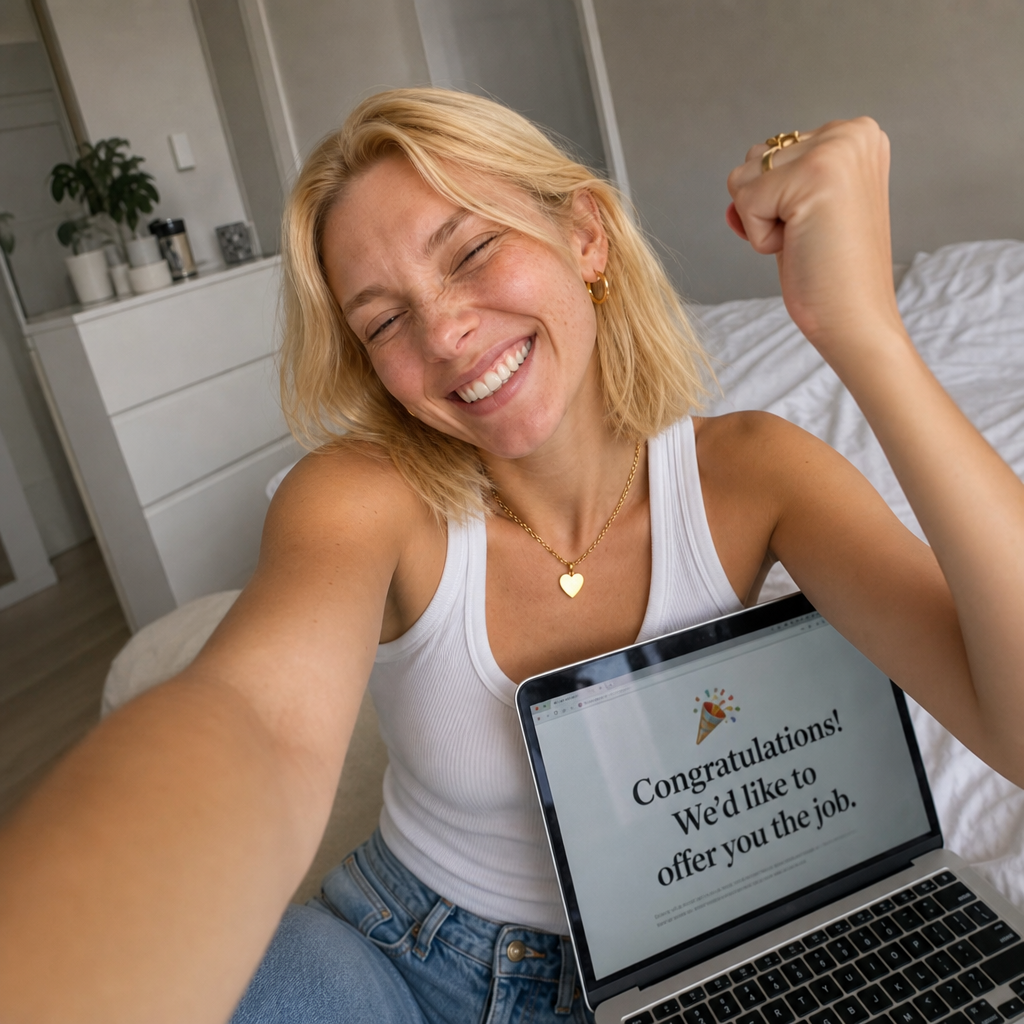
Job seeker about to send a follow-up email on a laptop

To follow up on a job application by email, wait 7 to 10 business days after applying, then send a short follow up email after the job application (under 120 words) to the recruiter or hiring manager. Use a subject line like "Following up on [Position] application," reference the role and your applied date, reaffirm your interest in one sentence, and offer to share anything else they need. Send between 10am and 2pm Tuesday through Thursday. If there is no response after the application or interview, send one second follow-up email 7 days later, then stop. Two follow-ups maximum.

Skip ahead to the in-page follow-up email generator (no signup needed) and have the email written in 30 seconds.

Last updated: May 23, 2026

You applied last Tuesday, you have refreshed your inbox 40 times since, and now you are wondering whether sending a follow-up email will help or whether it will look desperate. The job is real, the deadline has passed, and that automated "we have received your application" reply is the only thing in your inbox. Sending the wrong follow-up can hurt, but sending no follow-up at all almost always hurts more.

This guide gives you exact timing rules and 5 copy-paste email templates you can send in under 60 seconds. There is also an inline generator further down that fills your name, the company, the role, and the date into a clean template you can paste straight into your email client. No signup needed. Pick a template, paste, send.

Job seeker writing a polite follow-up email after applying to a job

When to Send Your Follow-Up Email (The 7-10 Day Rule Explained)

The window is 7 to 10 business days after the application date. Not calendar days. Business days. If you applied on a Monday, your earliest follow-up day is the following Wednesday at minimum, and ideally the Tuesday or Wednesday after that.

The reason for the window is mechanical. Most recruiter inboxes get 50 to 250 new applications per posting in the first 72 hours (a pattern LinkedIn Talent Solutions documents across mid-market US hiring), and triage happens in batches across the following week. Following up before day 7 lands you in a still-active pile, where your email is one more thing to sort. Following up after day 14 hits a closed pile, where your email looks like noise. The middle of week 2 is the moment a recruiter has reviewed the first round, is starting to schedule screens, and is open to a name that lifts itself.

The timing rule, in plain numbers:

Days 1 to 6: Do not follow up. Refresh nothing. Apply to other roles.
Days 7 to 10: Send your first follow-up email. This is the window.
Days 11 to 16: Wait. The recruiter has your second touch on file.
Day 17 to 18: Send a single second follow-up email if you have heard nothing.
Day 19 and beyond: Stop. Move on. The role is either filled, paused, or not a match.

If the posting itself gave a timeline ("we will be in touch within 2 weeks"), respect that timeline and add 2 business days before your first follow-up. The posting is the source of truth on cadence.

What to Include in a Job Application Follow-Up Email

A good follow-up email has 6 parts and almost no extras. Job seekers tend to over-explain, re-pitch their entire resume, or apologize for following up. None of those help. The 6 parts:

  1. A subject line under 50 characters that includes the role name and the words "following up." Example: "Following up on Marketing Manager application."
  2. A specific greeting. Use the recipient's first name if you have it. Default to "Hi Hiring Manager" if you do not.
  3. One opening sentence stating the role, the applied date, and that you are checking in. Two lines maximum.
  4. One sentence reaffirming your interest with a single specific reason. Not your full pitch. One reason.
  5. An offer to share more. "Happy to send additional samples or references" works for any role.
  6. A short close. "Thank you for your time," then your full name. Done.

The whole email runs 80 to 120 words. Anything longer reads as a second pitch and triggers the skim-and-archive reflex. If your draft is over 130 words, cut something.

Is It OK to Follow Up on a Job Application by Email?

Yes, and it is expected. Recruiters do not interpret a polite, well-timed follow-up as pushy. According to the Society for Human Resource Management (SHRM), a typical corporate recruiter manages 30 to 40 open requisitions at a time, and a short follow-up email is one of the most reliable cues that surfaces a candidate from a stacked inbox without forcing the recruiter to dig.

Email is also better than phone or LinkedIn DM in 2026. Email creates a written record that the recruiter can paste into your ATS profile, where their team can see it during pipeline reviews. Phone calls interrupt and produce no paper trail. LinkedIn messages get throttled and frequently sit unread in the secondary inbox. One short email at day 7 to 10 is the right move 9 times out of 10.

5 Follow-Up Email Templates You Can Copy-Paste

Each template below covers a real situation. Pick the one that matches yours, swap in the bracketed details, and send. None of these are written to impress. They are written to get a reply.

Template 1: First follow-up after applying
Subject: Following up on [Position] application
Hi [Recipient Name], I applied for the [Position] role at [Company] on [Date Applied], and I wanted to reaffirm my interest in the position. I am excited about the opportunity because [one specific reason, 1 sentence, tied to something in the posting], and I would welcome the chance to discuss how I can contribute to the team. If it would help, I am happy to share additional work samples or references. Please let me know if there is anything else you need from me. Thank you for your time, [Your Name]
Template 2: Follow-up after interview (no response)
Subject: Following up after [Position] interview
Hi [Recipient Name], Thank you again for taking the time to speak with me about the [Position] role at [Company] on [Interview Date]. I enjoyed our conversation about [one specific topic from the interview] and left even more interested in the position. I wanted to check in on the timing for next steps and let you know I am still very interested. I am happy to provide anything else that would help your decision. Looking forward to hearing from you, [Your Name]
Template 3: Second follow-up (still no response)
Subject: Re: [Position] application
Hi [Recipient Name], I wanted to follow up one more time on the [Position] role at [Company]. I originally applied on [Date Applied], and I remain very interested. If the role has been filled or is no longer open, I completely understand. If it is still open, I would love to be considered, and I am happy to send any additional materials that would help. Thanks again for your time, [Your Name]
Template 4: Follow-up after rejection (keep door open)
Subject: Thank you, [Company]
Hi [Recipient Name], Thank you for letting me know about the [Position] decision. While I am disappointed, I appreciate you taking the time to consider my application and to share an update. I remain very interested in [Company] and would welcome the chance to be considered for future roles that fit my background. If you keep a candidate pool, please feel free to keep me in mind. Wishing you and the team the best, [Your Name]
Template 5: Follow-up when you have a competing offer
Subject: Update on [Position] timeline
Hi [Recipient Name], I wanted to share a quick update on my job search. I have received another offer with a decision deadline of [Specific Date], and I wanted to be upfront because [Company] is my top choice for the [Position] role. Would it be possible to get a sense of where I stand and the expected timeline for a decision? I would much rather move forward with [Company] if the role is still open. Thank you for your time, [Your Name]

Each template assumes you already have a tailored, ATS-safe resume on file (ATS, the applicant tracking system most companies use to screen resumes before any human sees them). If yours needs work before you start sending follow-ups, our companion guide on how to write a resume after being fired covers cleanup, and our guide on how to put DoorDash on your resume shows how to handle gig work that filled the gap while you applied.

Follow-Up Email After Interview (No Response): Thank-You + Status Check

The follow-up email after a job interview is a separate beast from the post-application follow-up, and the timing rules flip. Send the thank-you within 24 hours of the interview, every time. Send the status-check follow-up email no response after interview at the 7-day mark, never sooner.

The thank-you is short. Three sentences. Thank the interviewer by name, reference one specific topic from the conversation that mattered (not generic), and reaffirm interest in one line. That email exists to prove you have basic professional manners and to plant a fresh memory before the interviewer writes their internal evaluation.

The status-check follow-up email is the one most candidates get wrong. Wait the full week after the interview, even if the recruiter said "we will be in touch by Friday" and Friday came and went. Then send something like this:

Status-check follow-up email after interview (7 days, no reply)
Subject: Following up on [Position] interview, [Interview Date]
Hi [Recipient Name], Thank you again for the conversation about the [Position] role on [Interview Date]. I am writing to check whether there is an update on next steps, and to reaffirm that I am very interested in the position. Happy to provide anything else that would help your decision. Thank you, [Your Name]

Four sentences. No new pitch. No new attachments. If there is no reply within another 5 to 7 business days, the role likely went to another candidate or the requisition was paused. Move on.

Polite Follow-Up Email Sample (Why Polite Wins Over Clever)

Every job application follow-up email template that performs in the wild follows the same pattern: plain, polite, specific, short. The temptation is to be clever, to use a hook, or to write a paragraph that "stands out." None of that helps. Recruiters scan for the role name and a clear ask. Cleverness reads as friction.

Compare these two openings. The polite version is the one that gets read and replied to:

Clever (skip)
Subject: Your next Marketing Manager (probably) Hi Sarah, I know your inbox is a war zone, so I'll be quick: I'd be a great fit for the Marketing Manager role and I have 3 questions about it that I'd love to talk through...
Polite (send)
Subject: Following up on Marketing Manager application Hi Sarah, I applied for the Marketing Manager role on May 12 and wanted to reaffirm my interest. Happy to share any additional materials. Thank you for your time, Jordan

The polite version is 32 words. It tells the recruiter the role, the date, and the action. The clever version is 51 words and demands the recruiter's attention before giving them anything they can act on. The polite one wins every time.

Follow-Up Email Generator (No Signup Needed)

If you want to skip the bracketed templates above, drop your details into the generator below. It builds the full email live as you type, including the subject line, and the Copy button drops the whole thing into your clipboard ready to paste into Gmail, Outlook, Apple Mail, or any other client. No signup needed, the data stays in your browser.

Follow-Up Email Generator

No signup

Fill in 5 fields. The email writes itself.

Applied 8 days ago. Sweet spot for first follow-up is 7 to 10 business days out.

Following up on [Position Title] application
Hi Hiring Manager, I applied for the [Position Title] role at [Company] on 2026-05-16 (8 days ago), and I wanted to reaffirm my interest in the position. I am excited about the opportunity because the role lines up closely with my background, and I would welcome the chance to discuss how I can contribute to the team. If it would help, I am happy to share additional work samples or references. Please let me know if there is anything else you need from me. Thank you for your time, [Your Name]

Follow-Up Email Subject Lines That Get Replies (8 Real Examples)

The subject line decides whether your email gets read or archived in the first 4 seconds. Recruiters scan inbox previews for the role name first, the sender name second, and everything else third. Keep the subject under 50 characters, lead with "Following up" or the role title, and never use clickbait.

  • Following up on Marketing Manager application
  • Re: Senior Software Engineer application, applied May 14
  • Quick follow-up, Operations Analyst role
  • Checking in on Project Manager application
  • Following up after Tuesday's interview, UX Designer
  • Re: Data Analyst position, application from Jordan Reyes
  • Following up on next steps, Account Executive role
  • Customer Success Manager, May application follow-up

Avoid all-caps, exclamation points, and any subject line that starts with "Hi" or "Hello" with no other context. Those read as cold pitches or sales emails and trigger the same archive reflex. The pattern that wins is plain, role-specific, and short.

How Long to Wait Between Follow-Ups

One business week. Seven business days between your first follow-up and your second is the smallest window that does not feel like pestering and the longest window that still keeps your name in active memory. Closer than 5 business days reads as anxious. Longer than 10 reads as forgotten.

If you have heard nothing 7 days after your first follow-up, send a single second email using Template 3 above. Keep it shorter than the first follow-up. Then stop. The total cycle (apply, wait 8 days, follow up, wait 7 days, follow up once more) takes about 16 business days from application to last touch. After that, the next move belongs to them.

Calendar showing the 7 to 10 business day window for sending a job application follow-up email

When Should I Send a Second Follow-Up Email?

Send the second follow-up email exactly 7 business days after the first, only if you have heard nothing in that window. Not sooner. Not 3 days, not 5 days, not "a week" loosely defined. Seven business days lets the recruiter cycle through one more triage pass and gives the role time to advance internally.

Keep the second follow-up email shorter than the first. Three to four sentences total. Restate the role and the original applied date, give the recruiter an easy out ("if the role has been filled or is no longer open, I completely understand"), and close. Template 3 in the section above is built for exactly this. Do not attach anything. Do not re-pitch. Do not apologize for following up again.

One more important rule: a second follow-up email is the cap. There is no useful "third follow-up." After two attempts with no reply, the signal is clear and continuing to email moves you from neutral to negative in the recruiter's notes.

When to Stop Following Up

Stop after 2 follow-up emails with no reply. Stop immediately if you receive a clear rejection. Stop if the posting was removed from the company careers page (the role was likely filled or paused). Stop if the recruiter you have been emailing leaves the company. Stop if you have already accepted another offer.

"No reply" itself is a reply 9 times out of 10. Hiring teams sometimes go silent because the role moved internally, the budget was cut, the timeline slipped, or another candidate signed. None of those are about you, and continuing to email will not surface the real answer. Two attempts, then move your effort to fresh applications. The energy you would spend on a 3rd follow-up is better spent applying to 3 more roles.

How Do I Follow Up on a Job Application Without Sounding Desperate?

Desperation in a follow-up email shows up in 4 specific tells, and every one is fixable. Recruiters skim for these signals before they read the message, so cutting them removes the desperation read entirely:

  • Apologizing for following up. "Sorry to bother you" or "I know you are busy" reads as low confidence. Recruiters read these openings hundreds of times a year and discount the rest of the message. Drop them entirely.
  • Re-pitching your resume. One sentence on why you fit is plenty. A second paragraph re-explaining your background signals that you do not trust the resume to do its job, which makes the recruiter not trust it either.
  • Multiple exclamation points or excited language. "I am SO excited" reads as performative. "I remain very interested" reads as professional and direct. The flat tone wins.
  • Sending too many follow-ups. A third email after two no-replies is the single loudest desperation signal. Two follow-ups, period.

The clean follow-up sounds confident because it acts confident. It assumes the recruiter is busy but reasonable, it gives them a one-sentence action ("happy to share anything else"), and it ends. That is the entire posture.

Common Follow-Up Email Mistakes to Avoid

The same handful of mistakes appears in 80% of underperforming follow-up emails. Each one is fixable in 30 seconds before you hit send.

  • Repeating your full resume in the body. The recruiter has it on file. One sentence on why you fit, then stop.
  • Apologizing for following up. "Sorry to bother you" reads as low confidence. Cut it.
  • Sending on Friday afternoon or weekends. It will sit unread and then get buried under Monday's email. Schedule for Tuesday at 10am.
  • Following up after 3 days. Too fast. Wait the full 7 to 10 business days.
  • Sending a third follow-up. Rarely works. Often hurts. Two is the cap.
  • Using a vague subject line like "Quick question" or "Hi." Recruiters delete those without opening.
  • CCing multiple people at the company. Pick one recipient. Reaching the whole team looks aggressive.
  • Asking for feedback in the same email. A request for feedback belongs in a separate, later email, not in the active follow-up.

The cleanest follow-up emails read like a polite reminder, not a sales pitch. The recruiter should be able to skim it in 6 seconds, understand exactly what you want, and reply with one sentence if they have an update. That is the whole job.

Tailor Your Resume to the Job Before You Follow Up

One follow-up email will not get you the interview if the resume on file is generic. Before you send the email, take 8 minutes to tailor your resume to the specific role. The QuickResumeAI builder pulls the keywords from the job description, restructures your bullets to match, and outputs an ATS-safe PDF you can attach to the follow-up itself. No signup needed.

For more on what to do while you wait, see how long to hear back after applying to a job. If you applied during a gap between roles, our guide on how to explain a resume gap from a layoff covers what to say if the recruiter does write back.

Frequently Asked Questions

Is it OK to follow up on a job application by email?
Yes. A polite follow-up email 7 to 10 business days after applying is expected, not pushy. Recruiters often manage hundreds of applications and a short, specific email keeps your name visible without being intrusive. Use the role title in the subject line, keep the body under 120 words, and reaffirm your interest in one sentence.
How many times should I follow up on a job application?
Two is the practical maximum. Send the first follow-up 7 to 10 business days after applying, and a second 7 days after that if you still hear nothing. A third follow-up almost never produces a reply and signals desperation. After two attempts with no response, move on and focus on new applications.
What time of day should I send a follow-up email?
Send between 10am and 2pm in the recipient's local time zone, Tuesday through Thursday. Mid-week, mid-day messages have the highest open and reply rates because they land after the morning email triage and before the afternoon meeting block. Avoid early Monday and late Friday entirely.
Should I follow up on weekends?
No. Weekend follow-ups sit in a recipient's inbox until Monday morning and then get buried under fresh email. They also signal that you are not respecting work-life boundaries. If you wrote the email on Saturday, schedule the send for Tuesday at 10am. Almost every email client supports scheduled sending.
What if the job posting says "no follow-ups"?
Respect it. When a posting says no follow-ups or no calls, sending one anyway moves you from neutral to negative in the recruiter's notes. Apply through the listed channel, document the date, and put your energy into new applications. Following the stated instructions is itself a hiring signal.
How do I follow up without seeming desperate?
Keep it short, specific, and forward. Reference the role by name, mention the application date in one line, reaffirm interest in one sentence, and offer to share anything else they need. Do not explain why you want the job again, do not apologize for following up, and never send more than two follow-ups for one application.
Should I attach my resume to a follow-up email?
Only if your resume changed since you applied. Recruiters already have the version you submitted, and a duplicate attachment forces them to compare files. If you have added a new certification, a measurable result, or you have tailored the resume to the role since applying, attach the updated PDF and mention it in one line. Otherwise skip the attachment.
What if the recruiter said they would get back to me but never did?
Wait until the day they specified, plus 2 business days. Then send one short follow-up referencing their original timeline by date. Example: You mentioned hearing back by the 14th, and I wanted to check whether there is any update on next steps. One reminder is fair. A second is not. Recruiters miss promises constantly because internal hiring timelines slip.
Can I follow up with a phone call instead of email?
Email is safer in 2026. Most recruiters track applicants and decisions in their ATS, applicant tracking system, and email creates a written record they can paste into your candidate profile. A phone call interrupts and rarely produces a useful answer because the recruiter cannot pull up your file mid-call. Use phone only if the posting lists a phone contact or if the recruiter explicitly invited a call.
How do I follow up on a job application without an email address for the recruiter?
Open LinkedIn, search the company, and filter people by titles like recruiter, talent acquisition, or hiring manager for your function. Send a short connection request that names the role you applied for and the application date. If LinkedIn fails, use the company's general careers inbox or the email format other employees use (typically firstname.lastname@company.com, confirmed via Hunter.io or similar).

Build your resume in minutes

AI-powered, ATS-optimized, and ready to submit.

Ready to build your resume?